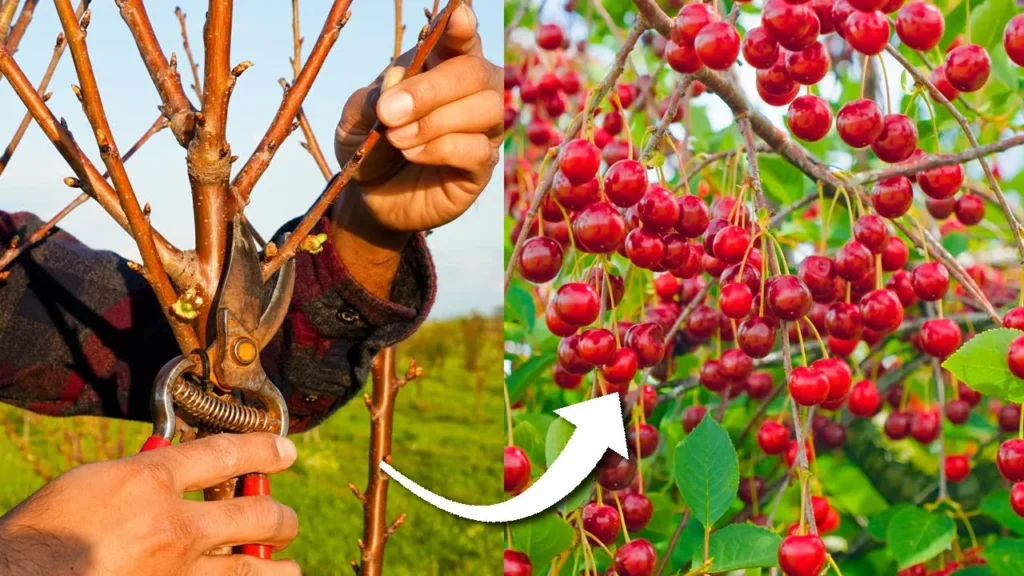
You’ve spotted dead branches on your cherry tree and your instinct says grab the secateurs. Stop. The wrong timing can kill a healthy tree within three years through silver leaf disease.
This guide explains exactly when to prune cherry trees UK gardens depend on, why timing matters more than technique, and how to protect your investment whether you have a fruiting Stella or an ornamental Prunus ‘Kanzan’.
When Should You Prune Cherry Trees in the UK?
The best time to prune cherry trees in the UK is mid to late summer, specifically from late June to the end of August. This window protects the tree from silver leaf disease and bacterial canker, which both spread through pruning wounds during cold, damp British weather.
Here’s the quick breakdown:
- Sweet cherries (Prunus avium): July to August, after harvest.
- Acid or sour cherries (Prunus cerasus): Late summer or early spring before bud break.
- Ornamental flowering cherries: Mid to late summer once blossom has finished.
- Newly planted trees: Light formative pruning in spring of year one.
- Emergency pruning (storm damage): Any time, but seal cuts with wound paint.
Avoid pruning between October and March under any circumstance. Even small cuts made during wet UK winters create open wounds that fungal spores colonise within hours.
Why Does Cherry Tree Pruning Timing Matter So Much?
Cherry trees belong to the Prunus family, alongside plums, peaches, and almonds. All Prunus species share a fatal weakness: high susceptibility to silver leaf disease, caused by the fungus Chondrostereum purpureum. This fungus releases spores during the colder, wetter months between October and April, exactly when most gardeners feel tempted to tidy up the garden. Once spores enter through a fresh pruning wound, they colonise the heartwood and slowly choke the tree from within.
Summer pruning works because the tree is in active growth. Sap flow is strong, wounds seal within 7 to 14 days, and fungal spore activity drops sharply in warm dry conditions. Winter wounds, by contrast, can remain open for six months or more, leaving plenty of time for infection to take hold. At TreeRebral, we’ve assessed dozens of dying cherry trees across the UK that were perfectly healthy until someone “tidied them up” in November. By the time silver leaf shows visible symptoms (silvery-grey leaves on one branch), the damage is already irreversible.
How Do You Prune a Cherry Tree Step by Step?
Cherry trees respond best to light, deliberate pruning rather than aggressive cutting. The aim is to maintain shape, improve airflow, and remove problem wood without stressing the tree.
Follow this professional approach:
- Choose a dry day with no rain forecast for at least 48 hours afterwards
- Sterilise your tools with diluted bleach or methylated spirits before starting and between trees
- Remove the 3 D’s first: dead, diseased, and damaged wood, cutting back to healthy tissue
- Take out crossing branches that rub together and create entry wounds
- Thin the centre to improve airflow, aiming for an open-goblet shape on fruiting varieties
- Cut just above an outward-facing bud at a slight angle, around 5mm above the bud
- Never remove more than 25% of the canopy in a single season
Use sharp bypass secateurs for branches under 2cm, loppers for up to 4cm, and a pruning saw for anything thicker. Anvil secateurs crush cherry wood and create ragged wounds that take longer to heal.
What’s the Difference Between Pruning Sweet, Sour, and Ornamental Cherries?
The three main cherry tree types each need a slightly different approach, even though all should be pruned in summer.
Sweet cherries (Prunus avium):
- Fruit on older wood and at the base of one-year-old shoots
- Need an open-centre or pyramid shape for sunlight penetration
- Common UK varieties: Stella, Sunburst, Lapins, Sweetheart
- Prune immediately after harvest, usually late July
Acid or sour cherries (Prunus cerasus):
- Fruit almost entirely on the previous year’s growth
- Need annual pruning to encourage new fruiting wood
- Common UK varieties: Morello, Montmorency
- Without pruning, fruit forms only at branch tips and stems break under weight
Ornamental flowering cherries:
- Grown for blossom, not fruit (Kanzan, Tai-haku, Yoshino, Amanogawa)
- Need minimal pruning, mainly to remove damaged or crossing branches
- Heavy pruning destroys the natural form they’re prized for
- Light shaping only, after flowering finishes
Common Cherry Tree Pruning Mistakes UK Gardeners Make
Most cherry tree problems we encounter at TreeRebral come from well-meaning but poorly timed pruning. These are the mistakes that cost trees their lives:
- Winter pruning: The single biggest killer of UK cherry trees
- Over-pruning: Removing more than a quarter of growth in one season triggers stress shoots
- Dirty tools: Spreading canker between trees through unsterilised blades
- Flush cuts: Cutting into the branch collar removes the tree’s natural defence zone
- Topping mature trees: Drastically reducing height creates wounds the tree cannot heal
- Ignoring rootstock: Trees on dwarfing rootstocks like Gisela 5 need different treatment to vigorous Colt rootstock trees
- Pruning during fruit set: Removing fruiting wood before harvest reduces yield
When Should You Call a Professional Tree Surgeon?
DIY pruning works for small, accessible cherry trees. Professional intervention becomes necessary in specific situations.
Call a qualified arborist when:
- The tree is over 4 metres tall and requires ladder or rope access
- Branches sit near power lines, buildings, or boundary lines
- You see signs of silver leaf, bacterial canker, or honey fungus
- The tree has deadwood larger than 10cm in diameter
- It’s a TPO (Tree Preservation Order) tree or in a conservation area, where unauthorised work breaches the law
Always check your tree surgeon holds NPTC qualifications and ideally Arboricultural Association approval. TreeRebral provides free assessments across our service area, with fully insured, qualified arborists handling every job.
Frequently Asked Questions About Pruning Cherry Trees
Can I Prune a Cherry Tree in Spring?
Light formative pruning on young trees is acceptable in early spring before bud break, around late March. Avoid main pruning in spring as wounds haven’t yet entered the rapid summer healing phase, and silver leaf spores are still active.
Will Pruning a Cherry Tree in Winter Kill It?
Not immediately, but it dramatically increases infection risk. Around 60% of mature cherry trees showing silver leaf in the UK had recent winter pruning. The disease can take 2 to 4 years to kill a tree after infection.
How Much Should I Cut Off My Cherry Tree?
Never remove more than 25% of the live canopy in a single year. Mature trees often need only 10 to 15% removed annually for maintenance. Heavy pruning shocks cherries far more than other fruit trees.
Do I Need to Seal Cherry Tree Pruning Cuts?
For routine summer pruning, no. The RHS no longer recommends wound paint for healthy cuts. For emergency winter cuts on storm-damaged branches, a thin coat of wound sealant offers some protection against silver leaf entry.
When Should Weeping Cherry Trees Be Pruned in the UK?
Weeping ornamental cherries like Prunus ‘Kiku-shidare-zakura’ should be pruned in mid to late summer after flowering. Focus on removing crossing branches and any growth heading upwards rather than weeping down.