
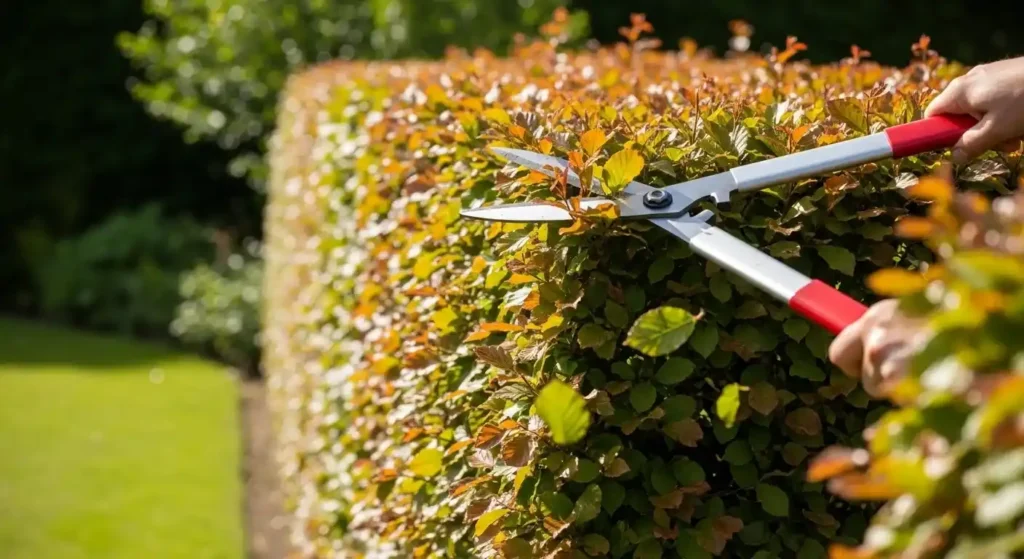
Most gardeners treat hedge maintenance like a chore to be checked off whenever the sun happens to shine. I’ve seen this led to “skeletal” hedges that lose their leaves exactly when you want privacy most. At Tree Rebral, we’ve learned that timing isn’t just about aesthetics; it’s about tricking the biology of the plant into holding its copper leaves through the winter.
If you’re looking for a professional hedge trimming service, you’ll find that the “August window” is the gold standard. Trimming at this specific time allows the hedge to produce a final, short flush of growth that doesn’t drop, providing that famous “marcescent” brown screen that lasts until the new green buds push them off in spring.
The Strategic Trim: Why August Is Your Best Friend
The absolute best time for Hedge Trimming Bournemouth homeowners should mark on their calendars is the second week of August. By this point, the primary spring growth has hardened, and the nesting season for local birds has safely concluded. Trimming now encourages the beech to keep its dead leaves, which is the hallmark of a high-quality Fagus sylvatica screen.
You should budget for one main trim per year, but if you’re a perfectionist, a light “tidy up” in June can keep things looking sharp. However, be extremely careful in June; nesting birds are protected under the Wildlife and Countryside Act 1981. If you disturb an active nest during a hedge trimming Poole project, you’re not just being a bad neighbor—you’re breaking the law.
The Late Summer Growth Spurt
Beech puts on a second, smaller spurt of growth in late July. If you trim too early in the summer, the hedge will just grow back “shaggy” by September. Waiting until August ensures the shape stays crisp for the entire winter duration.
Winter Leaf Retention (Marcescence)
The brown leaves of a beech hedge are technically dead, but they remain attached because the “abscission layer” doesn’t fully form. Trimming in late summer stresses the plant just enough to strengthen this bond, ensuring privacy even in December.
Bird Nesting Considerations
Before starting any hedge trimming service, we perform a “finger-tip” search of the foliage. If we find a nest, we stop immediately. Most birds have fledged by mid-August, making it the safest window for both the wildlife and the gardener.
Dormant Pruning for Overgrown Hedges
If your hedge has become a monster, don’t try to fix it in the summer. Major “rejuvenation” pruning should happen in February while the plant is dormant. You can cut beech back hard—even into old wood—and it will bounce back with vigor in the spring.
Structuring the Cut: The Art of the “Batter”
When performing hedge trimming Bournemouth residents often make the mistake of cutting vertical, 90-degree sides. This is a recipe for a “leggy” hedge with a thin, gappy bottom. At Tree Rebral, we always use a “batter”—sloping the sides so the base is wider than the top.
This A-shape structure is vital for health. It ensures that sunlight reaches the very bottom branches, preventing them from dying back and leaving your garden exposed to street-level passersby.
The Wide Base Rule
Aim for a base that is at least 20% wider than the top. This prevents the top from shading the bottom, which is the most common cause of sparse growth in older hedges.
Managing the Leading Shoot
If your hedge hasn’t reached its target height yet, don’t prune the top “leading shoots.” Let them grow 10-20cm past your goal before the first “topping” to ensure a dense, flat finish.
Visualizing the Seasonal Trim Cycle
| Month | Activity Type | Purpose | Tool Required |
| February | Hard Prune | Rejuvenating overgrown sections | Pruning Saw / Loppers |
| June | Light Tidy | Maintaining a formal “show garden” look | Hand Shears |
| August | Main Trim | Ensuring winter leaf retention | Petrol/Electric Trimmer |
| October | Mulching | Feeding the roots for spring | Garden Fork |
The Precision Finish: Why the Final 10% Matters
The difference between a “hacked” hedge and a professional hedge trimming service finish lies in the details. After the bulk of the foliage is removed, we go back with hand secateurs to prune back individual branches that the trimmer might have shredded.
- Clean Cuts (Step 1): Ragged edges lead to dieback and “silver leaf” fungal infections.
- String Lines (Step 2): We use a spirit level and taut string to ensure the top is perfectly flat across the entire length.
- Debris Removal (Step 3): Leaving clippings on top of the hedge creates “rot pockets.” Always rake the top clear after every pass.
Common Pitfalls and Pro-Tips for Bournemouth Gardens
In my experience, the sandy soils around the South Coast mean beech hedges can get “thirsty” after a heavy trim. I’ve seen perfectly healthy hedges turn yellow in late August because the owner didn’t water them after a major hedge trimming Bournemouth session.
The Sunscorch Risk
If you trim too hard on a scorching 30°C Day, the newly exposed inner leaves can burn. We always try to schedule major trims for overcast, cooler days to protect the delicate inner foliage.
Watering After Care
Give your hedge a deep soak at the roots (not the leaves) for 48 hours after a trim. This helps the plant recover from the “surgical shock” of the pruning.
Conclusion: A Legacy for Your Landscape
A beech hedge is a 50-year investment. Trimming it at the right time—specifically that mid-August sweet spot—is the difference between a brown, leafy wall and a bare, twiggy fence. Whether you DIY or hire a professional hedge trimming service, remember that the plant’s health dictates the schedule, not your weekend availability.
I predict that as our winters get milder, we might see the “August window” shift slightly later to account for longer growing seasons. However, for now, the traditional mid-August trim remains the undisputed king of maintenance.