Trees add life, shade and character to any property, but their strength depends heavily on the weather around them. In towns like Bournemouth, Poole and Christchurch, changes in wind, rainfall and temperature can slowly weaken even the healthiest trees. Many homeowners only notice problems when a branch snaps or a tree starts leaning after a storm. By understanding how weather affects tree stability, you can prevent damage, protect your home and keep your garden safe.
This guide explains the common signs of instability, the local weather risks in coastal areas and how professionals like TreeRebral Ltd help maintain strong, healthy trees all year round.
Why Weather Plays a Major Role in Tree Stability
Weather conditions influence the strength, health and structure of a tree throughout the year. Sudden changes can create stress, weaken branches and reduce root grip. Over time, this leads to tree stability issues, especially when the tree is older, already damaged or located in exposed areas.
In the South Coast, where conditions shift quickly from calm to windy, trees must constantly adapt. When these changes happen too fast, the tree struggles to stabilise itself. This is when problems begin.
Common Weather Conditions That Weaken Trees
High Winds and Their Effect on Tree Strength
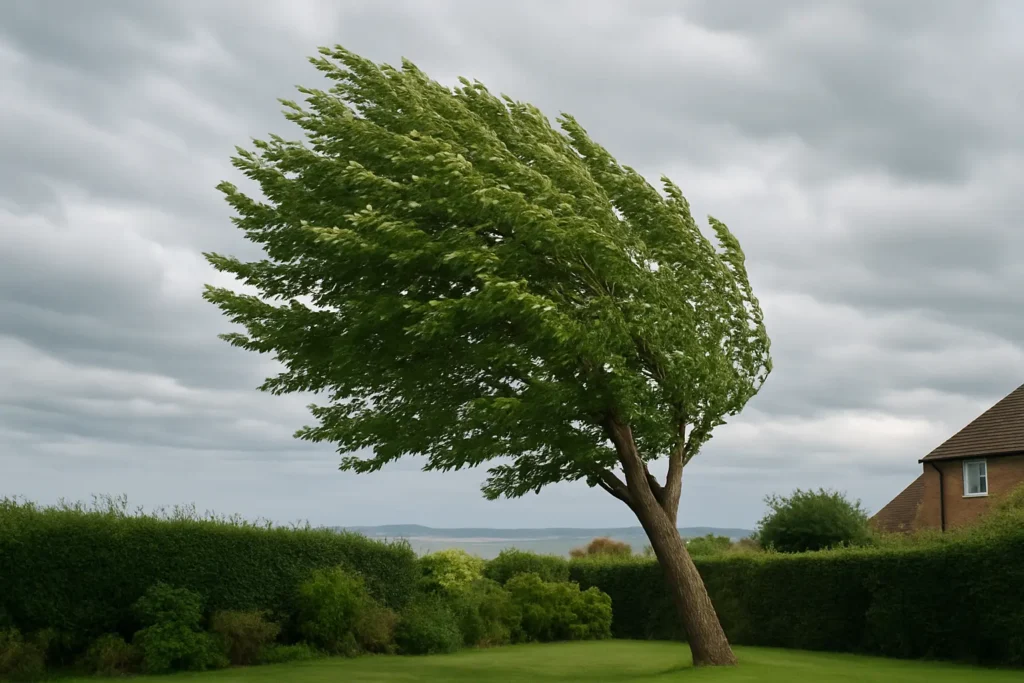
Strong winds are one of the main causes of tree damage in coastal towns. When high winds hit a tree repeatedly, the trunk and branches begin to flex beyond their natural movement range.
This leads to:
- Cracked or weakened branches
- Loosened root systems
- Branches snapping under pressure
Even healthy trees can suffer in long periods of high coastal winds because the force is both sudden and directional, often hitting trees from one angle.
Heavy Rain and Soil Saturation Around Roots
Rain is essential for tree growth, but too much water weakens the soil around the root system. When the ground becomes saturated, the roots lose grip, making the tree unstable.
In extreme cases, heavy rainfall combined with wind can uproot trees completely.
Storm Conditions and Structural Tree Failure
During storms, trees face multiple stress factors at once: wind, lightning, heavy rain, broken branches and unstable soil.
This combination often results in:
- Storm-damaged trees
- Split trunks
- Detached limbs
- Sudden leaning
Temperature Swings and Seasonal Stress
Sharp changes in temperature—common during autumn and winter—cause wood to expand and contract. This stress creates fractures and leaves trees more vulnerable to decay, pests and breakage.
This is a key part of tree health and weather changes, especially for older trees that struggle to adapt.
Early Signs a Tree Is Becoming Unstable
Unstable trees rarely fail without giving warnings. Here are the most common early signs:
Weakened Tree Branches and Visible Cracks
Branches that sag, become brittle or appear oddly shaped often signal internal weakness. Cracks in the trunk or along major limbs can mean the wood is splitting under pressure.
Shifting Roots and Leaning Trunks
If a tree begins to lean even slightly, it may be losing its anchoring. Look for heaving soil, exposed roots or gaps forming at the base. This often worsens after rainfall or wind.
Decay, Fungal Growth and Weather-Triggered Damage
Mushrooms, soft bark or hollow areas are signs of internal decay. Wet and windy periods speed up the breakdown, making the tree more likely to fail.
If you notice any of these issues, it’s a good time to call 07983079327 our tree surgeon to inspect the tree properly.
How to Assess Tree Safety After Severe Weather
After a storm or strong winds, a quick check can help you catch danger early.
What Homeowners Should Look for After Storms
Walk around the tree and check:
- Broken or hanging branches
- Loose soil at the base
- Cracks in the trunk
- Sudden leaning
- Bark falling away
Any of these signs suggest weakened stability.
When to Call a Professional Tree Surgeon
If something looks unsafe or unclear, it’s best to ask a specialist for a tree safety assessment.
Experts have the tools and experience to identify deeper issues, such as cracks inside the trunk or root damage below the soil.
How Regular Inspections Prevent Unexpected Failures
Routine checks throughout the year help catch minor issues before they become dangerous. Professionals can recommend pruning, support bracing or corrective measures to keep trees stable.
Why Coastal Weather Makes Trees More Vulnerable
Living near the coast offers many benefits, but the weather comes with challenges for trees.
Strong Coastal Winds and Salt Exposure
Coastal winds hit trees with more force and frequency. Salt carried in the air can also dry out leaves and bark, making trees brittle over time.
This is a major reason coastal weather tree risks are higher compared to inland towns.
How Bournemouth and Poole’s Climate Affects Tree Stability
The South Coast experiences a mix of strong winds, moisture and sudden shifts in temperature. These factors weaken roots, branches and overall structure faster than in sheltered areas.
Local climates make regular maintenance essential, especially for tall, mature trees.
How TreeRebral Ltd Helps Protect Trees from Weather Damage
As a local tree surgeon in Bournemouth, Poole and Christchurch, TreeRebral Ltd understands the unique challenges trees face in coastal environments. Their services focus on improving stability, reducing risk and strengthening trees before weather can damage them.
Professional Tree Safety Assessments
Experts inspect the tree’s structure, root system, canopy weight and any signs of stress caused by weather changes.
Pruning and Maintenance to Reduce Weather Risks
Correct pruning removes weak limbs, shapes the canopy and reduces wind resistance. This makes the tree safer and helps it withstand heavy conditions.
Emergency Support After Storm Damage
If a tree becomes unsafe after a storm, urgent help is often necessary. TreeRebral Ltd provides fast response for broken branches, leaning trees or fallen limbs.
When a Tree Becomes Unsafe and Needs Immediate Action
Some situations require quick decisions to protect your property:
- Branches cracking loudly
- Trees leaning suddenly
- Roots lifting from the ground
- Large limbs hanging over driveways or roofs
Ignoring these signs can lead to costly damage. Fast professional help reduces risk and keeps your home safe.
Final Thoughts
Weather changes affect trees more than most homeowners realise. From wind pressure to soil saturation, the conditions on the South Coast can weaken trees quietly over time.
A little awareness goes a long way. By checking your trees regularly and getting expert advice when needed, you can maintain a safe, healthy garden all year round.
Call TreeRebral Ltd for Professional Tree Care in Bournemouth and Poole
If you’ve noticed cracks, leaning or storm-related damage, now is the right time to get your trees checked.
TreeRebral Ltd offers reliable inspections, safe pruning and full support across Bournemouth, Poole and Christchurch.
FAQs
How Do High Winds Affect Tree Stability?
High winds put pressure on branches, trunks and roots. Over time this weakens the tree and increases the chance of branches snapping or the tree leaning.
What Signs Show A Tree Has Weather Damage?
Look for cracks, broken branches, leaning, exposed roots, fungus or loose soil around the base. These signs usually mean the tree has become unstable.
Why Are Coastal Trees More At Risk?
Coastal winds are stronger and more frequent. Salt exposure also dries out bark and leaves, making trees more brittle and prone to structural issues.
Should I Check My Trees After Every Storm?
Yes, a quick inspection helps you spot broken branches, cracks or movement in the trunk. Early detection reduces the risk of serious damage.
Can A Tree Recover From Storm Damage?
Some trees recover with correct pruning and care. Others may need professional attention or removal if the trunk or root system is badly compromised.
When Should I Call A Professional Tree Surgeon?
If a tree leans suddenly, large branches are hanging loose or cracks appear in the trunk, contact a professional immediately.
How Does Treerebral Ltd Help Keep Trees Stable?
They offer safety assessments, pruning, maintenance and emergency storm support, all tailored to Bournemouth, Poole and Christchurch.