
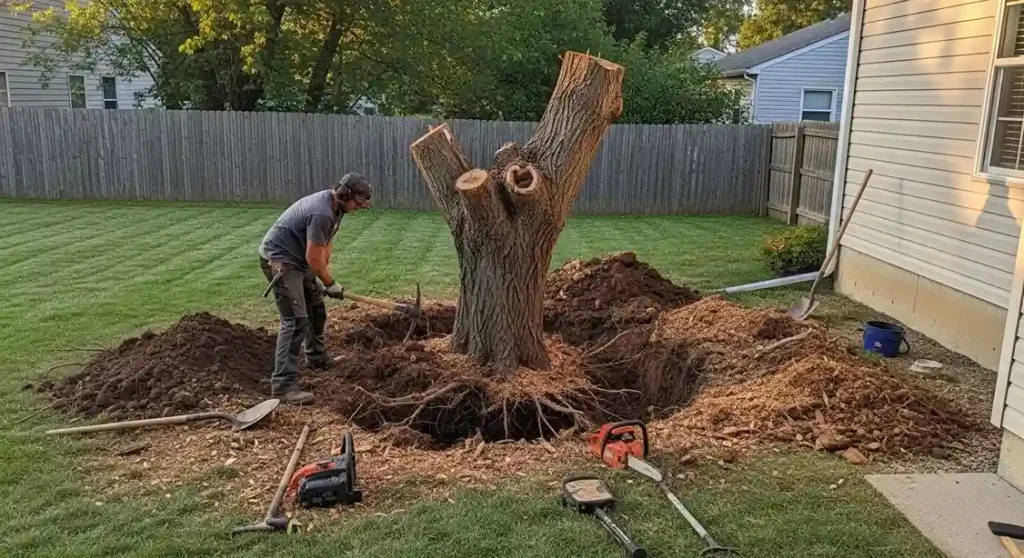
Most homeowners look at a freshly felled oak and assume the hard part is over. I have seen this optimism firsthand during my time in the field. It often leads to frustration when a small cherry tree resists extraction for hours. The truth is that while the trunk is visible, the root plate is an anchor. At Tree Rebral, we know that removing the wood is only a small part. Managing the underground network is the real challenge for any property owner.
If you are looking for a realistic timeline, you must consider the species density. For a standard residential property, you are looking at several hours of mechanical work. This journey often spans several days if you use chemical accelerants. Discrepancies exist because of variables like soil compaction and proximity to utility lines. You must also account for the specific taproot depth of your particular tree species. This ensures a safe and effective removal process for your garden.
The Hidden Pre-Extraction Phase: Why 30 Minutes Matter
Before the stump grinding Bournemouth, machinery touches the wood, a technician must perform a survey. This is where most garden disasters actually occur. I once watched a DIYer burst a main water pipe because of assumptions. You should budget at least 30 minutes for a qualified arborist from Tree Rebral. We scan the area for telecommunication cables and check nearby structural integrity.
The Root Survey and Access Check
Professional teams do more than just start an engine. They use probing rods to ensure the root flare is safe. Expect a fifteen-minute setup for the debris screens on your site. This ensures that no windows are broken during the grinding process.
Manual Digging vs. Mechanical Grinding
If the tree was small, you might consider a spade. However, if the diameter exceeds 10 inches, manual labour is a risk. Most Stump Grinding Bournemouth Specialists prefer high-torque machinery for efficiency. This turns the wood into biodegradable mulch in just a few minutes.
Chemical Decay and The Long Game
If you are not in a rush, potassium nitrate can help. These stump killers hasten the natural decomposition process of the wood. This method takes weeks to soften the lignin for easier manual removal. We find that mechanical extraction is better for immediate landscaping results.
Securing Your Professional Service Slot
Top-tier tree surgeons are rarely sitting in their trucks waiting. Most reputable teams in the Dorset area are booked weeks in advance. If a firm says they can arrive instantly, check their insurance. You need a team with proper public liability cover for your peace of mind.
Breaking Down the Work: Where the Real Time Goes
Once the carbide-tipped teeth start spinning, the rhythm of the garden changes. For the first twenty minutes, you will see little change in height. The engineer is shaving the surface roots to prevent machine kicks. This is a strategic move to avoid hidden flint stones or metal. By the forty-minute mark, the main heartwood is finally breached. This is the moment the stump begins to vanish from sight.
Once the core is gone, the focus shifts to the depth. We must descend below the turf level to ensure no regrowth. At Tree Rebral, we always target the main anchor roots during this stage. This prevents any future suckering that could ruin your lawn. The process is loud but highly effective for long-term garden health. You will soon have a clear space for your new projects.
Typical Removal Duration for UK Gardens
- Small Stumps (under 10 inches): These usually require 45 minutes of active grinding.
- Medium Stumps (12 to 24 inches): Expect a two-hour window for full extraction.
- Large Stumps (over 25 inches): These often require half a day with heavy machinery.
- Deep Excavation: If you plan to replant, add an extra hour for deep grinding.
Calculating the exact duration requires an understanding of the site conditions and the tree’s health status. Hardwoods like Oak or Beech will always take longer to grind than softer Conifer species. You should always ensure that the area is clear of stones before the machinery arrives on your property. This simple step can save an hour of downtime caused by blunted cutting teeth.
The Final Check: Why the Last Stage Matters
The job is not finished when the wood is gone. It is finished when the soil biology is protected. The reinstatement stage requires a dedicated period of manual work. I once saw a homeowner find a sinkhole after the first rain. This happened because the air pockets were not compacted.
Mulch Management and Disposal
We decide whether to leave the organic mulch or remove it. This material is excellent as a weed suppressant for flower beds.
Root Chasing and Lateral Removal
A vital stage where we follow the lateral roots outward. We ensure they won’t interfere with new fencing or paving.
Soil Replacement and Levelling
We fill the hole with a mix of soil and mulch. This prevents the ground from sinking as the remaining roots decompose.
Final Compaction and Safety Check
A quick check to confirm the ground is level now. This ensures the area is no longer a trip hazard.
Conclusion: Planning for a Clear Garden
Knowing How to Remove a Tree Trunk is rarely a simple task. It is a technical arboricultural challenge that requires the right tools. When handled correctly by Tree Rebral, it protects your property from subsidence. If you call a specialist today, assume a three-hour window. My best advice is to build in a buffer for root chasing. You will likely need it for a stubborn oak taproot.
Looking ahead, I expect UK Environment Regulations to become even stricter. This will increase the focus on soil health and recovery. We might see more soil-care time added to call-outs in the future. This ensures that your garden remains a healthy ecosystem for many years.
FAQ’s About Tree Trunk Removal
Can You Leave A Tree Stump in The Ground?
Yes, you can leave a stump, but it will eventually start to decay. This natural process can take up to 20 years depending on the tree species and soil moisture. Leaving a stump can attract wood-boring pests like termites or carpenter ants. It also remains a permanent tripping hazard and can interfere with mowing or new landscaping plans.
What Is the Fastest Way to Get Rid of a Tree Stump?
The absolute fastest method is stump grinding Bournemouth residents typically use. A professional stump grinder can reduce a large trunk to wood chips in under an hour. While manual digging can take days and chemical removal takes months, mechanical grinding provides an immediate below-grade finish, allowing you to turf over the area the same day.
Is It Better to Grind A Stump or Dig It Out?
This depends on your future plans for the site. Stump grinding is faster, less invasive, and more affordable. However, if you plan to build a structure or plant a new tree in the exact same spot, full stump removal (excavation) is better. Excavation removes the entire root ball, whereas grinding leaves the deep roots to rot naturally underground.
Will A Tree Stump Grow Back After It Has Been Cut?
Certain species like Sycamore, Willow, or Poplar are notorious for sending up new shoots from the remaining roots. To prevent this, you should either grind the stump to at least 12 inches below the surface or apply a targeted herbicide to the cambium layer immediately after felling. This ensures the root system is fully killed.
What Can I Use to Kill A Tree Stump Naturally?
If you prefer to avoid harsh chemicals, Epsom salt or rock salt can be used to dehydrate the wood. You must drill deep holes into the trunk and fill them with the salt. Another eco-friendly method is forced darkness—covering the stump with a heavy-duty black tarp to starve it of sunlight and moisture, which accelerates the fungal decomposition process.