
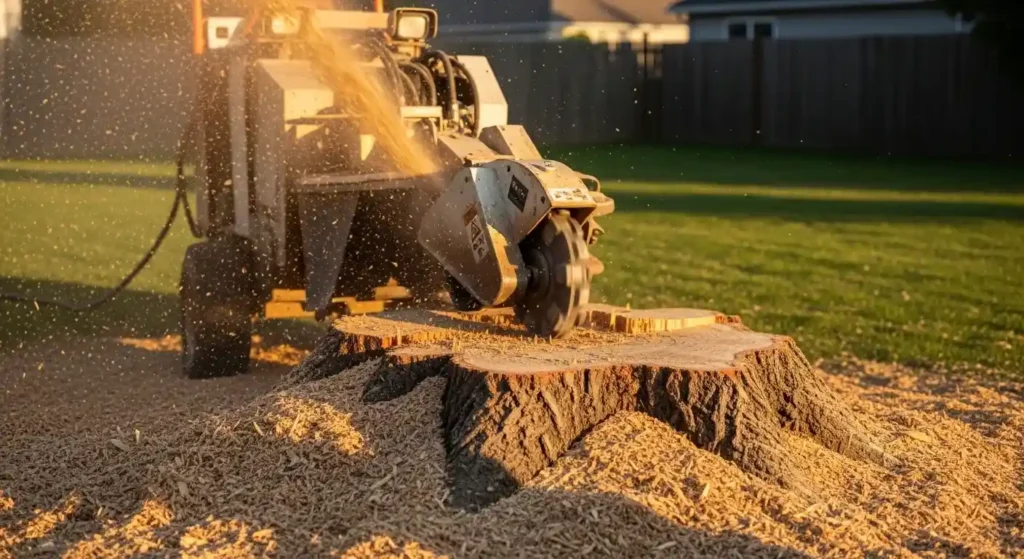
Most homeowners look at a massive oak base and think a quick rental machine will solve the problem in an hour. I made that exact mistake during my first year at Tree Rebral when I tackled a 48-inch cedar with an underpowered 13-horsepower unit. Four hours later, I had barely scratched the bark and realized that stump diameter is only half the story.
If you are staring at a legacy stump, you need to plan for more than just the grinding time itself. While the actual “teeth-to-wood” contact for a large stump usually takes 45 to 90 minutes, the total site presence is much longer. Factors like soil grit, root flare spread, and machine access determine whether you finish by lunch or spend the entire weekend in the dirt.
The Anatomy of a Large Stump: Why Size Is Deceiving
A large stump is not just the visible wood above the grass line. It is a dense, lignin-heavy anchor that extends deep into the subsoil and radiates outward through lateral roots. At Tree Rebral, we categorize anything over 36 inches as a high-volume project because the sheer cubic footage of wood mulch generated is staggering.
You must account for the root plate depth which often reaches 12 to 18 inches below the surface. If you ignore the subterranean mass, the ground will heave or sink as the remaining wood rots over the next decade. Professional-grade equipment is the only way to ensure the cambium layer is fully destroyed to prevent unwanted regrowth from the edges.
The Four Pillars of Grinding Velocity
The Horsepower Factor
Engine torque is the primary driver of speed. A diesel-powered 75-horsepower grinder will eat through a 40-inch beech stump in 45 minutes. A smaller petrol rental will take three times as long and likely overheat.
Wood Density and Species
Hardwoods like Oak or Hickory put immense stress on the carbide-tipped teeth. Softwoods like Pine are faster to process but create more resinous buildup on the cutting wheel. This buildup requires frequent cleaning breaks.
Soil and Rock Integration
Stumps grown in rocky soil are a nightmare for efficiency. One hidden flint stone can dull an entire set of cutting teeth in seconds. We always factor in “teeth change time” when working in high-grit environments.
Underground Utility Hazards
Speed drops to zero when you are working near fiber optic cables or gas lines. We use CAT scanners to map the area before the wheel touches the ground. This safety step is mandatory for every professional job.
Site Logistics: The Invisible Time Wasters
The grinding process produces a volume of debris that is roughly three times the size of the original hole. Many people forget that clearing the arisings takes almost as much effort as the grinding itself. At Tree Rebral, we spend the first twenty minutes just setting up debris screens to protect your windows from flying wood shards.
If the stump is located behind a narrow garden gate, we must use a pedestrian grinder. These machines are narrower but lack the mass and power of tow-behind units. This single access constraint can double the time required to finish a large-scale stump removal project in residential areas.
Estimated Duration Based on Stump Diameter
| Stump Diameter | Estimated Time | Complexity | Tool Required |
| 24 to 30 Inches | 30 to 45 Mins | Moderate | 35HP Grinder |
| 31 to 45 Inches | 60 to 90 Mins | High | 75HP Turbo Diesel |
| 46 to 60 Inches | 2 to 3 Hours | Expert | Tracked High-Flow |
| 60+ Inch Legacy | 4+ Hours | Extreme | Vertical Boring Unit |
The Final Stage: Backfilling and Restoration
Do not walk away the moment the wood is gone. The hole left behind is a significant safety hazard for children and pets.
- Debris Management: You must decide if the wood chips will stay as mulch or be hauled away for composting.
- Hole Preparation: We rake out the larger chunks to ensure the remaining hole can settle properly over time.
- Topsoil and Seed: Adding high-nitrogen fertilizer helps break down any remaining fine root matter left in the ground.
The final walkthrough ensures that no lateral roots are poking through the surface. We check for “soft spots” where the machine might have collapsed a hidden cavity. Never consider the job done until the site is leveled and the utility markers are removed.
Tactical Performance: 4 Success Secrets
The Sharpness Metric
Dull teeth turn a 60-minute job into a four-hour ordeal. We rotate our Greenteeth sets every morning to maintain peak cutting force.
The Sweep Technique
Short, shallow passes are faster than deep, heavy lunges. This prevents the engine from “bogging down” in dense heartwood sections.
Chip Clearance
Stop every ten minutes to clear the pile. Excess mulch smothers the wheel and creates dangerous friction and heat.
Moisture Levels
Saturated wood is heavy and clogs the discharge chute. Waiting for a dry spell can shave 20% off your total work time.
Common Obstacles for Large Scale Removal
In my years with Tree Rebral, the most common delay is the “hidden surprise” inside the wood. I once found a rusted garden gate grown entirely inside an old Maple. These foreign objects destroy carbide tips instantly and require a full machine shutdown for repairs.
The Wire Fence Trap
Old boundary fences often get swallowed by growing bark. This metal wire can wrap around the bearing housing and cause catastrophic mechanical failure.
Neighboring Structures
If the stump is against a wall, we cannot use the full swing radius. This requires careful, vertical “nibbling” that takes significantly more focus.
The Root Chasing Dilemma
Some clients want every lateral root removed. Chasing a single root for ten feet can add an hour to a standard job.
Grinder Surface Stability
Large machines need level ground. If the stump is on a steep slope, we spend thirty minutes just “cribbing” the machine for safety.
Conclusion: Value and Future Growth
Grinding a large stump is a vital investment in your land’s future health. Removing the stump base prevents honey fungus from spreading to your healthy garden plants. If you plan to replant a new tree, ensure you grind to at least 18 inches deep to clear the old root structure.
I predict that future Stump Grinding technology will move toward electric high-torque motors. This will reduce noise pollution in residential neighborhoods while maintaining the power needed for hardwood processing.